
Turning waste into wonder: inside the circular economy
Sustainability · 4 min read · By the Now We Know TV! field team
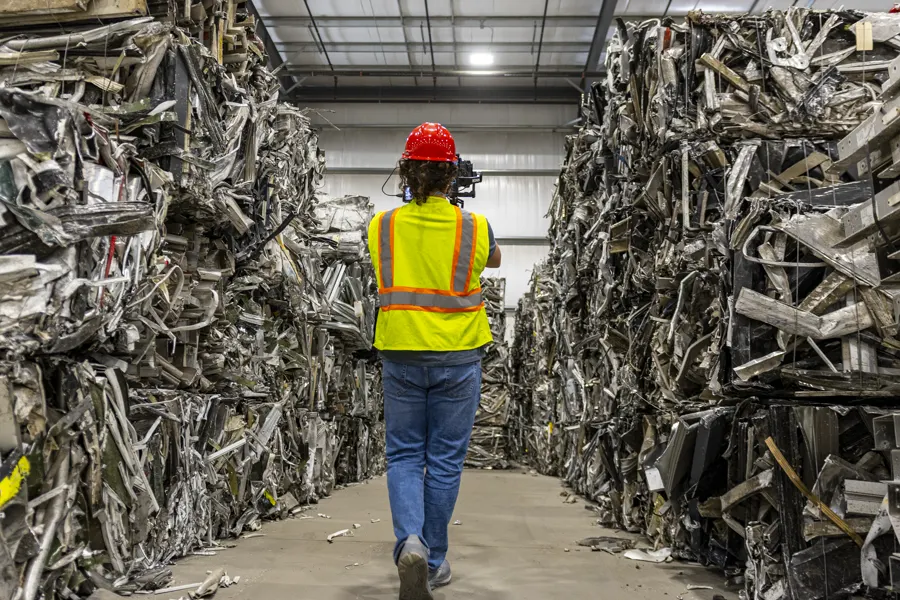
The first thing that hits you is the scale. Walk into a Schupan recycling facility in Michigan and you are surrounded by walls of baled aluminum cans, stacked higher than a house, packed so tight they gleam like brickwork. Our field crew stood in that canyon of crushed metal for the better part of a morning, and the trucks never stopped arriving.
Recycling is one of those subjects everyone supports and almost nobody understands. Cans go in the bin. A truck takes them away. Then what? That question became the backbone of our Season 1 segment with Schupan, and the answer turned out to be a business story as much as an environmental one.
The round trip of a can
An aluminum can that comes back through a return center can be sorted, baled, melted, and rolled into new can stock in a matter of weeks. Aluminum does not degrade the way paper or plastic does. The metal in your hand may have been a can dozens of times already, and it can keep going almost indefinitely. That property is what makes the circular economy more than a slogan here: the loop actually closes.
What the segment shows, and what surprised our producers most, is how much of that loop depends on logistics rather than idealism. Sorting has to be clean. Bales have to meet spec. Transport has to be priced so that recycled metal competes with newly mined metal. A recycling company succeeds the way any manufacturer does, on quality, consistency, and cost.
Why it works as a business
Schupan has spent decades proving that the environmental case and the business case can be the same case. Recycled aluminum requires dramatically less energy to produce than primary aluminum, and that energy saving shows up as economic value at every step of the chain. When the crew asked what keeps millions of pounds of material in play, the answer was refreshingly unromantic: customers who need the metal, and a team that gets it to them in the right form at the right time.
That is the version of sustainability this show looks for. Not a promise about the future, but an operation you can walk through today, hard hats on, forklifts beeping, doing the quiet work of making waste a raw material again.
Read the Schupan case study or catch the full segment on CNBC, Saturdays at 11 AM ET.